EVCI.tech – Cape Town · For Padstal & Roadside Café Owners
Energy + Kilowatts.
Your Padstal, Their Pitstop.
Travellers need to stop. Padstal EV Chargers Western Cape. Two chargers, a good cup of coffee, and a two-hour breakfast – and you’ve just added R30,000+ to your monthly revenue. Here’s exactly how.
The opportunity
Why Your Padstal (Roadside Cafe) Is Perfectly Positioned
Think about your typical roadside customer. They’re travelling. They’re tired. They want to stop, stretch, eat something decent, and get back on the road feeling human again. That’s always been your business. But EV drivers have an additional, non-negotiable need: they have to charge the car. Not want to – have to.
An EV driver on the N1 between Cape Town and Johannesburg needs to stop 3 – 4 times. They’re not choosing a stop based on the decor. They’re choosing it based on where the charger is. Right now, most padplaases have no charger. That’s your gap. The business that installs two 11 kW AC chargers today gets listed on PlugShare, Google Maps, and ChargePoint – and suddenly EV drivers are planning their routes through your stop specifically.
This isn’t a charity project. It’s a revenue stream – one with a payback period under three months when you factor in the meal spend.
Padstal / Roadside Cafe
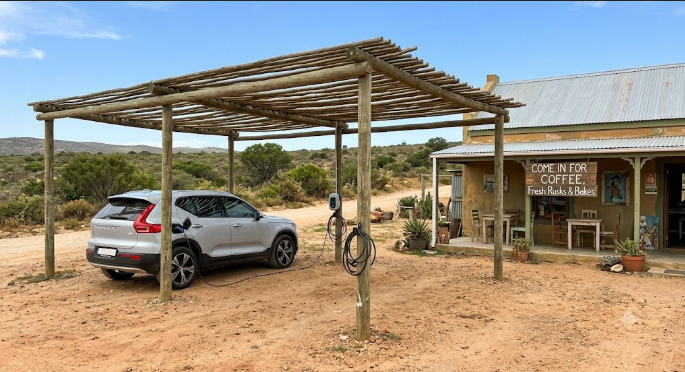
Simple as this
How It Works – The Guest Experience
Guest pulls in
EV driver sees your charger on PlugShare or ChargePoint SA before leaving home. Your stop is already in their route plan.
Plugs in
Type 2 cable into the car. Charger activates via app or RFID. R100 charging fee billed for the 2-hour session.
Orders breakfast
They have 2 hours. They’re not going anywhere. Full breakfast, second coffee, maybe a slice of cake. Average spend R200+.
22 kWh added
11 kW x 2 hours = 22 kWh. That’s approximately 120 – 130 km of range restored. Guest leaves happy and confident.
They come back
Same driver, same stop, every time they do that route. EV drivers are creatures of habit – their charger stops become loyalties.
Let’s do the maths
The Business Case / Per Day / Per Month
Two chargers. Three sessions each per day. Six cars total. Here’s every number, honestly calculated – including the energy cost that comes off the top.
| Monthly P&L | Calculation | Amount |
|---|---|---|
| Charging revenue | R100 × 6 sessions/day x 30 days | + R18,000 |
| Meal revenue (EV guests) | R200 x 6 guests/day × 30 days | + R36,000 |
| Total monthly revenue | Combined charging + meals | R54,000 |
| Energy cost | 22 kWh x R3.00 x 6 sessions x 30 days | = R11,880 |
| Gross profit per month | Revenue minus energy cost | R42,120 |
Electricity at R3.00/kWh commercial tariff + Meal spend is conservative· (Charger margin (R34/session) not including meal upsell)· Food cost of meals not deducted – this is gross revenue, not net profit
Growth scenarios
What Different Traffic Levels Look Like
4 cars / day
R28,080
gross profit/month
Payback: 4.5 months6 cars / day
R42,120
gross extra margin/month
Payback: 3.0 months8 cars / day
R56,160
Extra Gross Marging/Month
Payback: 2.2 months10 cars / day
R70,200
gross profit/month
Payback: 1.8 monthsWhat you’re investing (Note these are ballpark figures)
Installation Cost Breakdown
Full Installation Investment
R125k – R150k invested. R42k gross extra margin per month. Full payback in 4 -6 months.
A properly installed commercial AC charger has a 10 year service life. The math works!
Beyond the numbers
The Advantages Nobody Talks About
Guests stay longer
An EV guest who is charging cannot leave early. They’ve got 2 hours. That’s a second coffee, a slice of koeksister, a look at your farm stall. Dwell time is your friend.
Loyalty built in
EV drivers are planners. Once they’ve stopped at your place and had a good experience, your stop goes into their route permanently. You don’t earn a customer – you earn a regular.
Free marketing on route apps
Listing on PlugShare , Chargepointsa , and Google Maps as an EV charging stop means EV drivers find you before they leave home. Zero advertising spend. Your charger is your billboard.
First mover advantage
Most Padstals and roadside stops have zero EV charging. Install now and every EV driver on that route becomes your customer before your competition even notices the trend.
Part of the infrastructure
Your business becomes part of South Africa’s national EV charging backbone. That’s a story worth telling on social media, in your listing, on a sign outside. EV drivers respect and support it.
Property value uplift
A commercial property with installed EV infrastructure and a documented revenue stream from charging is worth more. It’s an income-generating asset.
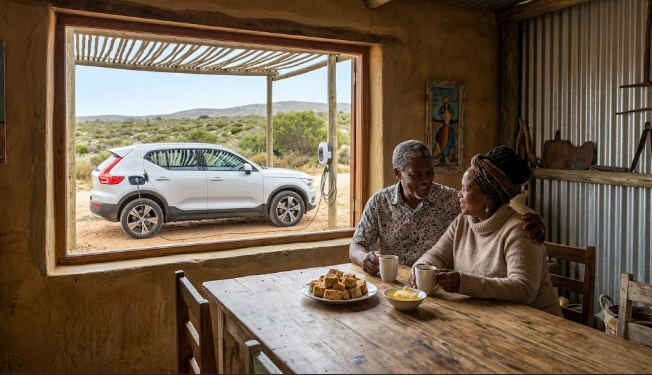
Charging an extra 20 – 25 kWh over coffee
The bigger picture
EV Drivers Must Stop – Your Padstal Stopover Can Be Where
Cape Town to Johannesburg: 1,400 km + 4 mandatory stops
A typical EV has a real-world range of 300 – 350 km. That means the CT – JHB drive requires 3 to 4 charging stops. Every EV driver on that route is looking for exactly what you can offer: a comfortable place to sit, something good to eat, and a charger that works. A 2-hour breakfast adds ~130 km of range. That’s enough to reach the next town on a full stomach.
Requirements
What You Need to Make This Work
Minimum requirements for a successful installation
Padstal EV Chargers Western Cape