What is Level 1 home charging?
The “granny charger” gets a bad name for being slow. It deserves a second look.
You drive a PHEV with a battery under 20kWh. You get home at 30%, plug in the portable charger, and go to sleep. By morning you’re back to 80%.
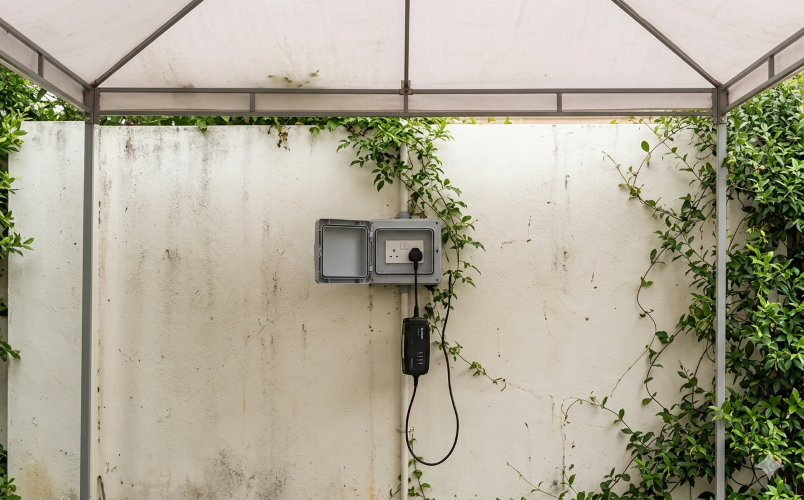
How slow is “slow,” really?
Level 1 gets its bad reputation — the “granny charger” label — because it can’t compete with a wallbox on raw speed. That’s true. But perspective matters: most people aren’t racing to 100%, they’re topping up overnight while asleep.
Does a couple of hours really matter?
You drive a PHEV with a battery under 20kWh. You get home at 30%, plug in the portable charger, and go to sleep. By morning you’re back to 80%.
Do you need an electrician to set this up?
Yes and no. If you’re plugging into a socket on a shared circuit, get an electrician to install a dedicated 16A circuit just for the charger.
There’s a real reason for this: shared household circuits are built for intermittent loads — a kettle for a few minutes, a toaster, a heater cycling on and off. An EV charger draws near its maximum continuously for 6–10 hours straight. That sustained load is real thermal stress on the wiring and the socket, and a circuit shared with other appliances can overheat and fail where a dedicated one won’t.
Running a guesthouse? You probably don’t need a wallbox yet.
Offering EV charging is good for business — it brings in EV-driving guests. But do you need an expensive Level 2 charger? At this stage of EV adoption, most times, no.
Install one dedicated Level 1 socket. Guests bring their own portable charger and plug in safely overnight. Simple, affordable, and enough to remove range anxiety as a reason not to book with you.
Scale up to a Level 2 wallbox later, once demand is busy enough to justify it — the cabling and DB work from the Level 1 install carries over, so nothing is wasted.
Don’t write off Level 1 just yet
- ✕“Level 1 is basically unusable.”For overnight top-ups on a PHEV or a moderate daily commute, it’s often all you need.
- ✕“Any wall socket is fine, forever.”Fine for occasional use. For nightly charging, put it on a dedicated 16A circuit.
- ✕“You need a Level 2 charger to attract EV guests.”Not at this stage — a dedicated Level 1 socket is often enough, and far cheaper.
Not sure if your circuit is up to it?
A free site assessment tells you exactly what your board can handle — no obligation.
WhatsApp Frankie →What is Level 1 home charging?
Q
A Level 1 EV charger is a standard charging cable that typically comes included with your electric vehicle. It plugs directly into a standard household electrical outlet (such as a 16 amps socket in South Africa) and feeds alternating current (AC) into the vehicle’s on-board charger without requiring any special electrical installations or upgrades.
Level 1 charging is the slowest option available, typically adding roughly 8-10 km per hour). Because of this slower speed, a full charge from empty to 100% can take anywhere from 12 to 16+ hours, making it best suited for overnight top-ups or drivers with short daily commutes. But if charged daily, the norm is 30% – 80% – reducing charge time significantly.
No (with caveats), a professional electrician is generally not required for Level 1 charging. Because it operates as a plug-and-play device utilizing standard household electrical wall sockets, you can safely set it up yourself, provided the existing wall outlet is in good condition, properly grounded, and capable of handling a continuous low-amp load. * If using a shared circuit, it’s a good idea to have an electrician check it out.