Debunking Free Solar EV Charging | EVCI.techDebunking Free Solar EV Charging
Free EV charging with solar?
You’ve got solar panels on the roof and a new EV in the driveway. Surely the car charges for free, right? It’s a reasonable assumption — and it’s almost entirely wrong. Here’s the honest version.
1.4 hrs
to drain a 10kWh solar battery with a 7kW charger
2kW
grid shortfall when a 5kW solar system meets a 7kW charger
8 yrs
max battery life if deep-discharged daily for EV charging
Let’s set the scene
A typical Cape Town solar home
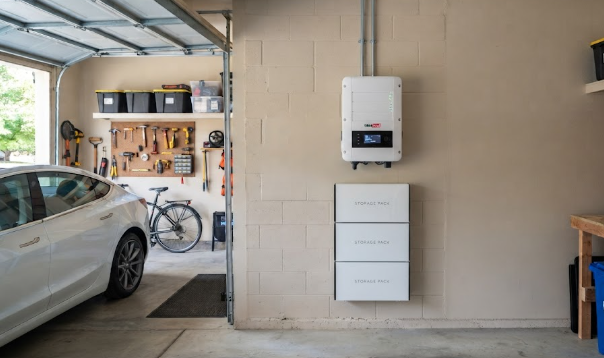
Most South African homeowners who’ve invested in solar have done so to cut their utility bill and survive load shedding. The typical residential setup in South Africa looks like this:
Most common
5–8 kW
Solar panel array output. Generates roughly 25–40 kWh on a good day in Cape Town.
Battery storage
10–15 kWh
Usable battery capacity. Sized for load shedding backup — not EV charging.
Your new charger
7.4 kW
What a standard (dumb) home wallbox draws. More than most single appliances in your house combined.
That battery was sized to keep your lights, fridge, router, and TV running through a 4-hour load shedding session. It was not designed to charge a car. The maths becomes very uncomfortable very quickly.
The battery problem
Your solar battery won’t last long
Plug a 7kW wallbox into your solar battery and watch it disappear. Here’s exactly how fast a typical home battery bank is depleted under EV charging:
Gives you roughly 52 km of range. Your load shedding backup: gone.
7kW charger + 15kWh batteryFlat in 2.1 hours
Gets you ~79 km of range. Bigger battery, same problem.
3.6kW charger + 10kWh batteryFlat in 2.8 hours
Still only 52 km of range — just slower to deplete the battery. Still empties it completely.
3.6kW charger + 15kWh batteryFlat in 4.2 hours
~79 km of range. The 3.6kW throttle helps stretch it out — but the battery still empties.
The conclusion is uncomfortable but clear: your solar battery is not a car battery. Night charging from stored solar energy doesn’t give you much range, and it largely depletes the backup you installed for load shedding.
The daytime problem
Solar produces 5kW. Charger wants 7kW.
What about charging during the day, while the panels are generating? Surely that’s free? Yes … closer — but still not the whole story.
A 5kW solar system at peak output on a clear Cape Town afternoon produces around 5kW of power. Your 7kW charger wants 7kW. The gap — that missing 2kW — still has to come from the grid. The panels are helping, but they’re not covering it 100%.
Power available vs power needed at peak solar (5kW system)
5kW solar system — peak output5kW
5kW from panels
8kW solar system — peak output8kW
8kW from panels ✓
7kW charger — full speed7kW needed
2kW must come from grid
3.6kW charger — throttled3.6kW
3.6kW — 5kW solar covers it ✓
Peak solar output hours in Cape Town: roughly 10am–3pm. Outside of this window, the panels are generating significantly less — and the shortfall from the grid grows accordingly.
On top of the power gap, your household is still running while you charge. The fridge, geyser, pool pump, and other appliances are all drawing from the same solar output. In practice, the charger gets whatever’s left after the house has taken its share — which on a 5kW system is rarely enough for a full-speed 7kW charge.
Not all chargers are equal
Fixed charger vs smart charger
This is where the charger that came in the box with your car matters more than you might expect. There are two fundamentally different types:
❌ Fixed output
Dumb wallbox
7kW — always
Plugged in, it draws 7kW. Full stop. It cannot see how much solar is available, cannot throttle itself, and cannot respond to what else is happening in the house. It wants its 7kW and it will wait for nothing.
Examples: Most OEM dealer-supplied units, basic Geely wallbox
✓ Flexible output
Smart wallbox
3.6kW → 7kW
Can be throttled — manually or automatically — to match what the solar system is actually producing. A smart charger linked to the inverter can charge at exactly the solar surplus, making true solar-powered charging a real possibility.
Examples: Victron EV Charging Station, Zappi, some Wallbox models
If you have a fixed 7kW charger — which describes the majority of EV buyers who take the free wallbox their dealer supplies — solar-aware (100% free) charging simply isn’t possible without replacing the unit or adding an external controller (or maybe your onboard settings).
The hidden cost
Night charging wears out your battery
There’s a second problem with night-time solar charging that nobody mentions when they sell you the idea: it wears out your solar battery.
⚠️
Deep daily discharge shortens battery lifespan significantly
A typical lithium solar battery (LiFePO4) is rated for 3,000–6,000 charge cycles at 80% depth of discharge. If you deep-cycle it nightly to charge your EV, that’s 365 full cycles a year. At the low end, your battery life is reduced to roughly 8 years of heavy daily use — compared to 15+ years under normal load shedding use patterns. You’re trading battery longevity for modest, partial charges that don’t even fill the car.
The battery you paid R80,000–R150,000 for was designed to provide years of reliable load shedding backup. Using it as a nightly EV fuel tank is an expensive way to get limited range — and shortens the lifespan of a component that’s costly to replace.
The real answer
So what actually works?
None of this means solar and EVs are incompatible. They can work beautifully together — but only when the system is set up correctly from the start. Here’s what actually delivers genuine solar-powered EV charging:
1
A smart, throttleable charger. One that can dial between 3.6kW and 7kW automatically, responding to how much solar surplus is available at any given moment.
2
Daytime charging, not nightime. Charge the car while the panels are producing — not from the battery after dark. True free charging happens between 10am and 3pm, not at midnight.
3
Solar excess routing. An inverter that’s properly configured to direct surplus solar generation to the charger first, before sending it back to the grid. This requires correct setup by a competent installer — it doesn’t happen automatically.
4
Protect the solar battery. Don’t route EV charging through the battery bank. Set the system so the charger draws direct from solar generation, with the grid as top-up — not the battery.
5
An 8kW+ solar system helps enormously. An 8kW system generating 7kW+ at noon can genuinely cover a full-speed 7kW charger on a clear day, with nothing left over for the grid to fill. Below 7kW solar output, you’ll always have a grid contribution at full charge speed.
💡
The bottom line on “free charging”
Daytime charging with a smart charger on a well-configured solar system — yes, that can be genuinely free or near-free. Night charging from a solar battery: not free, not good for the battery, and limited range. The myth isn’t that solar and EVs can’t work together — it’s that “I have solar, so charging is free” is the starting assumption for every setup, regardless of whether the pieces actually fit.
I'm a senior licensed electrician. I do electric vehicle charger installations in and around Cape Town, Western Cape (only).
One thought on “Debunking Free Solar EV Charging”
I would like to get extra perspective from solar experts – what are the limitations of solar for home EV charging and do the expectations meet the reality. If you’re a solar expert expert and reading this – please – appreciate your input.

I would like to get extra perspective from solar experts – what are the limitations of solar for home EV charging and do the expectations meet the reality. If you’re a solar expert expert and reading this – please – appreciate your input.